Thursday, 30 May 2019

Retinal Cryotherapy – Helping The Retina To Be Restored

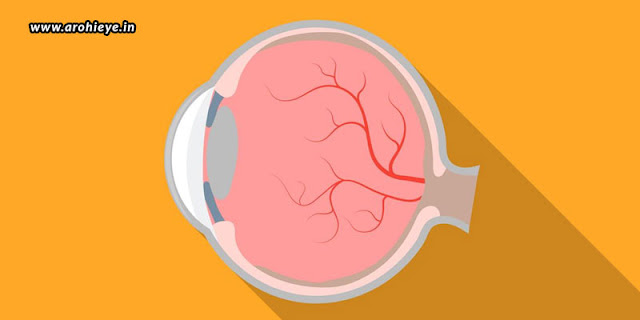
Can you believe that the retina that helps us to see the entire world around us is only 0.5-1 mm thick!? Imagine the size of the membrane and the incredible function it does! You can also imagine how even the smallest problem in the retina can affect this tiny membrane so badly, which may hinder our vision to such a great extent that we may go temporarily or permanently blind!
Retina Treatment in Andheri West

Thursday, 16 May 2019

Squint Eye – What It Is And How It Can Be Treated

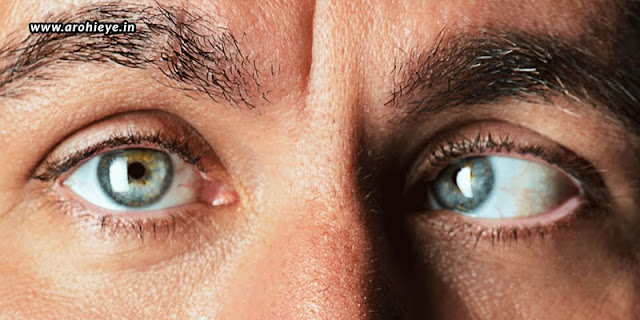
Squint or strabismus is a disorder of the eyes wherein there is an issue with the positioning of the eyeballs. While one eye may focus on the object you are viewing, the other may point to somewhere else. It may be upwards, downwards, or sideways, but it won't be in line with the other eye that sees properly. Thus, both sights won't arrange at the same time; and they will be looking in different routes.

Eye Specialist in Andheri West Mumbai

Sunday, 7 April 2019

Vitrectomy – All You Should Know - Arohi Eye Hospital

Vitro retinal surgery is a group of surgeries that take place inside the interior of the eyes where the vitreous and retina are located. The vitreous is a gel-like material, and the retina is the photosensitive membrane that helps in creating images in front of the eyes. Traditional surgical tools and lasers are used to perform these vitreoretinal procedures to address a range of ophthalmic issues like diabetic retinopathy, detached retina, macular degeneration, macular hole, diabetic vitreous hemorrhage, and epiretinal membrane.


What is vitrectomy?
Vitrectomy is a specific type of vitreo retinal surgery that removes the vitreous gel-like substance located in the middle of the eye. It is performed under general or local anesthesia, depending upon the patient’s health. During this procedure, an eye surgeon inserts small instruments into the eye to cut the fibers which attach the vitreous gel to the retina, and suction out the vitreous. The holes or tears in the retina or macula are then repaired, the areas where the retina is detached is flattened, and the vitreous fibers or scar tissue attached to the retina is removed. Then, the vitreous cavity is filled with gas, saline solution, or silicone oil, to restore normal eye pressure.

What all does vitrectomy resolve?

With this procedure, a number of eye-related problems can be resolved. The most common problem that vitrectomy is used to resolve is diabetic vitreous hemorrhage, a condition in which the retina bleeds into the vitreous. Patients who suffer from vision loss, distortion, or disruption due to vitreous hemorrhage have observed highly improved visual acuity by undergoing vitrectomy. The procedure also reduces the risk of severe bleeding in patients who experience vitreous hemorrhage or those with abnormal blood vessels in the iris.

Whеn іs vіtrесtоmу required?

A vitrectomy is required when complications like retinal detachment, elevated intraocular pressure, corneal edema, continued bleeding in the vitreous, or internal eye infection arise. The surgery is used as a last resort in extreme cases that do not clear up with other treatments. This is why it is very important that when you have any such problems in the eye, you consult a professional eye specialist in Andheri West Mumbai to diagnose your condition and check for other treatments, before deciding upon performing vitrectomy. Every patient and every eye is different, thus respond differently to a treatment. So, an eye specialist will let you know if vitrectomy is what you should take up, and the other precautions you will need to take with it.

Arohi Eye Hospital is the best eye specialist in Andheri West Mumbai who has the skill and experience to diagnose and treat a number of eye related issues. They could be simple ones like dry eye and eye floaters, or complicated cases like glaucoma and diabetic retinopathy. The surgeons can perform almost every kind of surgery with expertise, some of the specialties including LASIK, cataract surgery, and oculoplasty. So, whenever in doubt for any eye condition, Arohi Eye Hospital is where you should be.


Sunday, 24 March 2019

How Cataract Surgery Can Help You See The World Through A Different Lens - Arohi Eye Hospital


Cataracts is a very common eye problem seen in adults all over the world. After a certain age, cataracts occurs in the eyes when a part of the lens in the eye becomes cloudy. A common cause of blindness, cataracts can be resolved only with surgery, wherein various types of lenses are used to be replaced in the eye so that you can see the world through a different lens!


Friday, 8 March 2019

Different Types Of LASIK Procedures - Arohi Eye Hospital

Planning to go through the LASIK procedure to get rid of your spectacles? That’s a great decision you have made! But, have you decided upon which LASIK procedure you are going to undergo? Confused? You may not have heard of this yet. You may have thought that LASIK is where your eyes are operated upon with a laser, wherein the procedure takes only a few minutes to eliminate your refractive error. But no, there are many different procedures that come under the LASIK procedure like laser, blade-free, and touchless LASIK. You can get in touch with Arohi Eye Specialist Hospital to understand what these procedures are, and do undergo the best LASIK surgery in Oshiwara Mumbai for the most promising results.


Laser procedure

This is the most common of all LASIK procedures, wherein the cornea of the eye is cut with an instrument known as ‘microkeratome’, and the flap of tissue is raised for applying the laser energy so that reshaping can be carried out for correcting the vision. This procedure is well suited for people with long-sightedness, short-sightedness, and astigmatism. However, this is not suitable for those with strong lens prescriptions. The best part about this procedure is that there are no stitches or bandages required, and that the recovery is really quick and easy.


Blade-free procedure

In this technique, a precise incision is made with a femtosecond laser, instead of a microkeratome, which makes the surgery more precise and safe. This is why this procedure is also called femtosecond LASIK procedure. This laser provides maximum comfort to the patient, with minimal risk of complications. This procedure takes almost negligible time, about one minute per eye; and the visual outcome is awesome which gives a perfect 20/20 vision. This procedure can be performed on patients with thin corneas, as there is reduced risk of infection and healing problems.


Touchless procedure

In this procedure, there is no need of creating a corneal flap, which means no flap related complication at all! In fact, there is no instrument used in this procedure. As the name itself suggests, this procedure is a completely no-contact procedure, which is the safest and most accurate way of eliminating the refractive error. It takes only a few seconds to complete the procedure as only laser light is used. With such short operative time and accurate results, this procedure is a no-cut no-pain practice, with almost zero risk of retinal tear and astigmatism. This procedure is safe for people with thin cornea, and bilateral eyes can also be treated in the same session with this procedure.

While all of the above procedures are safe and beneficial to help you get rid of your spectacles and contact lenses, it is always better to get a suggestion from a professional. Have your eyes checked and make sure that a professional eye doctor suggests you a LASIK eye surgery in Oshiwara Mumbai before you plan on undergoing one. Also, ask the doctor to suggest you with the best technique suitable to your eyes.


Sunday, 24 February 2019

Cataract Surgery – After Care

Any kind of surgery in itself seems to be a difficult job; and then, the care to be taken after the procedure is intense and long. Same is the case with cataract surgery. While your cataract surgeon will let you know all the precautions and care that you must take after the surgery, we are also here to help you with some general care tips. But, before we get into the care tips, let us understand what we are going to experience after the surgery.


Thursday, 7 February 2019

Low Vision – All you Should Know - Arohi Eye Hospital


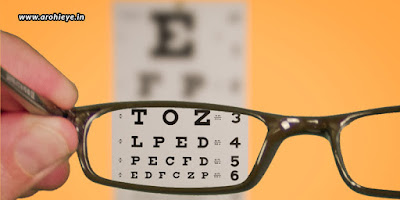
February has been designated as “Low Vision Awareness Month” by the National Eye Institute, with the purpose of raising awareness about visual impairment, and rehabilitation for those living with low vision. So many lakhs of people aged 40 and above are living with low vision in India every year. Low vision means having 20/70 vision or even poorer than that, with symptoms ranging from blurred vision, tunnel vision, or blind spots.


According to the World Health Organization, these are the ratings given to different proportions of vision.

  •  20/30 to 20/60: Mild vision loss, but near normal vision
  •  20/70 to 20/160: Moderate low vision
  •  20/200 to 20/400: Severe low vision
  •  20/500 to 20/1,000: Profound visual impairment
  •  Less than 20/1,000: Near-total blindness
  •  No light perception whatsoever: Total blindness

Generally, people with vision that can't be corrected beyond a vision of 20/200, or those who have less than 20% of their visual field remaining are considered legally blind. So, if you have vision problems, it could be a concern for you, and you must avoid reaching the stage of 20/200.

Our vision changes with age. As we age, our eyesight worsens. This is why the major population of people with vision loss is older adults. This is the reason we see older adults not being able to enjoy even the simplest tasks like reading, cooking, and any kind of up-close work. But, to make their lives easier, many helpful aids are available to assist them and help them make the most of the vision they still have, making it easy to enjoy their lives. One of the most important ways to enhance vision for such people is magnification. Magnifying and telescopic lenses are used as low vision devices and aids for those who love to read and do tasks close to the eye. Other adaptive devices help to maximize the remaining vision that a patient has. Also, those who wish to use the computer can take assistance from voice command and computer magnification settings. There are many other medications and surgical alternatives available to help slow the progression of low vision, and provide as much vision for as long as possible. However, this depends on the cause behind low vision. For example, those suffering from retinitis pigmentosa and other retinal-based conditions are provided with retinal implants that can help restore vision. Efforts are still being put in to bring many other innovations and breakthroughs in the field of low vision to offer hope and bring happiness in the lives of those suffering from the ailment. God forbid, if you are suffering from any such vision loss problems, you need the treatment of an eye specialist in Andheri West Mumbai, one like Arohi Eye Hospital, who can diagnose your condition and prescribe the right kind of medication and treatment for you.

We have understood what low vision is, what the symptoms are, what the different types are, and how it can be treated. But, what is the main cause of low vision? There could be many factors like glaucoma, diabetic retinopathy, age-related macular degeneration, retinitis pigmentosa, traumatic brain injury, cataracts, and amblyopia. If you are worried about any of these symptoms, have your eyes checked by an eye checkup clinic in Oshiwara Mumbai to diagnose any problem at the earliest and treat it accordingly.